
Domestic Water Pump
Domestic Water Pump
Water pressure that works for your home.
Slow taps, an unreliable shower or a pump that struggles during the morning rush can make everyday routines awkward. We help with domestic water pumps for houses and apartments, from investigating poor performance to looking after an existing system or fitting a suitable replacement.
Based in Terenure, Dublin. Give us your Eircode to check appointment availability.
A busy home asks more of its water supply.
The shower is running upstairs. Someone opens a tap downstairs. Suddenly, the shower feels much weaker. That change tells us something useful about the demand on the system, but it does not identify the cause on its own.
A domestic water booster pump adds pressure to the supply feeding the outlets connected to it. Some arrangements serve one bathroom; others support several rooms. The important question is how the system behaves when your household actually uses it.
Booster Pumps can assess the existing pump alongside the supply serving it. Tell us which taps or showers are affected, and if the problem is recent or has always been there. Those details help us distinguish a developing fault from a system that no longer suits the home.
Where does the water come from?
Two homes with equally weak showers can need different solutions. Before discussing a domestic pump installation, we need to understand the cold water supply and how the hot water is produced.
A stored-water system
A cold water tank and vented hot water cylinder are typical features of a gravity-fed arrangement. Tank height contributes to the natural pressure, so performance can differ between floors.
A suitable pump can boost selected supplies, subject to the model and installation. Tank capacity, refill rate and the routes to the pump need attention too, especially when several people use water close together.
A mains-pressure system
A combi boiler or an unvented cylinder calls for a different assessment. An ordinary gravity-fed shower pump is not a general-purpose solution for these systems.
We first establish the incoming supply and the equipment already fitted. Any proposed boosting arrangement must be suitable for that system and follow the applicable installation requirements.
For further background on system types, see Stuart Turner's water system guidance.
A few things worth knowing about domestic pumps
You do not need to know the technical name of every part. A description of what happens during normal use is a good starting point.
These answers explain the general principles. The pump manual and the actual plumbing determine what applies in your home.
Can one domestic water pump supply two bathrooms?
Some domestic pumps can serve several outlets, but the answer depends on the model, water supply and simultaneous demand. Two bathrooms used separately are a different load from two showers running together. The pipework and any water storage must also support the intended use.
Is a domestic booster pump the same as a central heating pump?
No. A domestic booster pump supplies water to connected taps, showers or other household outlets. A central heating circulation pump moves water around the heating circuit. They do different jobs and cannot simply be exchanged. A photograph of the pump label helps identify which equipment needs attention.
Will water still reach the taps during a power cut?
An electric pump stops boosting when its power supply is lost. Some installations retain a limited natural flow or have a suitable bypass; others may have little or no flow at the pumped outlets. The plumbing arrangement determines what remains available, so ask about your own system.
Does a domestic pump make water safe to drink?
A booster pump changes pressure; it does not purify water. Drinking water suitability depends on the source, storage, pipework and the pump's approval for that application. An existing pump is not proof that every connected tap supplies drinking water.
How much does a domestic water pump cost to run?
The cost depends on electricity consumption, running time and your electricity tariff. A variable-speed model can adjust its output as demand changes, but savings depend on the installation and how it is used. Unexpected running when nobody is drawing water is a reason to have the system checked.
What does your pump need now?
Domestic water pump work can mean restoring a failed unit, checking a working pump or planning a change. We can discuss the service that fits the condition of your equipment.
Something has changed
A new noise, a leak or a loss of performance needs investigation. Our repair service checks the pump and possible system causes before suitable repair options are explained.
Explore pump repairsThe pump needs attention
Servicing covers inspection, performance checks and attention to relevant components. The work depends on the pump design and its manufacturer's guidance, rather than a single routine applied to every unit.
See pump servicingYou need a new arrangement
If a pump is no longer suitable, we can advise on replacement or installation. The proposal should cover the equipment, connection work, access and testing, so you can understand what is being quoted.
Read about replacementRecognise the name on your pump?
We work with domestic pumps from Grundfos, Walrus, Stuart Turner, DAB, Lowara, Wilo, Ebara and Tech-Flo. The make helps identify the equipment, but the exact model tells us much more about its intended use.
A clear label photograph is useful when you enquire. It lets us discuss the correct pump family and check model-specific repair or replacement options without asking you to dismantle anything.
You can still contact us if the label has faded. Describe the pump's location, what it serves and the issue you have noticed.
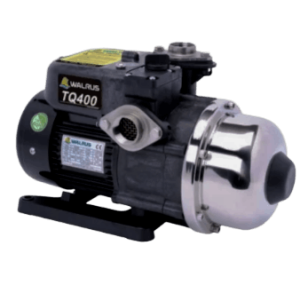
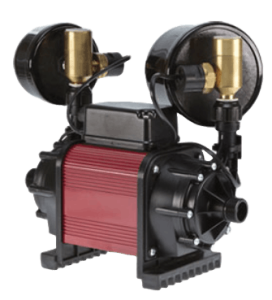
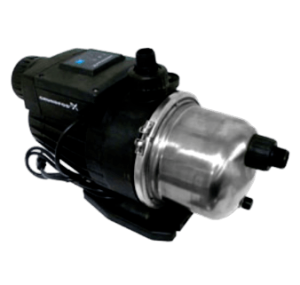
Examples of existing pump types. Suitability and parts availability are checked for the individual model.
Keep the pump in mind when your home changes.
A second bathroom, a larger shower or more people living at home can change the demand on an existing domestic water pump. Mention planned alterations early, while the plumbing choices are still open.
For a system already in daily use, small observations are useful. A change in sound or running time can help an engineer understand what has happened between visits.
Useful habits between visits
- Keep the model information, manual and previous service details together.
- Leave the pump accessible, with the ventilation space specified for that model.
- Note new noises, dampness or changes in performance and arrange advice.
- Discuss the appropriate service interval for your equipment and its use.
Inspection and repair of electrical or pressurised components should be left to a competent professional.
Tell us what happens at the tap.
Is the pressure poor everywhere, or only in one room? Has it always been like this, or did something change?
Contact Booster Pumps with a short description, your location and any pump details you have. We can discuss the next step and confirm availability for your address before a visit is arranged.
info@boosterpumps.ie Enquire about your pump
Terenure, Dublin
For an address elsewhere in Ireland, please check service availability with us first.
Please complete the contact form below and we will contact you as quickly as possible.